Chenille Yarn Amigurumi: 12 Tips for Seeing Stitches, Hook Size and Neat Plushies
Chenille makes the softest plushies, and it is also famously tricky. These tips cover hook size, counting invisible stitches, starting without a messy magic ring and finishing neatly.
Save this guide to Pinterest
Chenille and other velvety plush yarns turn simple shapes into irresistibly squishy toys. They also hide your stitches, shed a little and refuse to be unravelled cleanly. The good news: a few habits make chenille yarn amigurumi much less stressful. Here are the twelve that matter most.
What is chenille yarn, and why is it tricky?
Chenille is made of a thin core thread with short fibres (the "pile") sticking out all around it. That pile is what makes it soft. It also covers the tops of your stitches, so the V shapes you normally count disappear into fuzz. The core can be slippery, and when you pull out stitches the pile tends to flatten or shed. These quirks explain almost every tip below.
Tip 1: Choose a smaller hook than the label suggests
Ball bands often suggest a large hook because they assume blankets and scarves. Amigurumi needs dense fabric so stuffing doesn't show. Many makers go down noticeably from the label, and plush bulky chenille is commonly worked with a hook somewhere around 4 to 5 mm for toys. The LoopSouk chenille panda pattern uses a 4.0 to 4.5 mm hook.
The real test is simple: make a small swatch circle, stuff it lightly, and look. If you see fibrefill between stitches, go down a size.
Tip 2: Don't crochet too tightly, either
It sounds contradictory, but very tight chenille is hard to get the hook into and strains the core, which can snap. Aim for firm but relaxed. Let the smaller hook do the tightening, not your hands.
Tip 3: Swatch first, every time
Chenille brands vary a lot in thickness. Work the first 6 rounds of your pattern and measure. Compared with the pattern's size, this tells you whether your toy will come out bigger or smaller, before you have invested an afternoon.
Tip 4: Start with a ch 2 if the magic ring fights you
A magic ring in chenille can be hard to close because the pile grips itself. Two common workarounds: chain 2 and work the first round into the second chain from the hook, or make the magic ring with a strand of thin, smooth yarn in the same colour and then switch to chenille. If you do use a magic ring, pull the tail firmly and then work one more stitch before tightening again. Our magic ring tutorial has more on getting a tight centre.
Tip 5: Use a stitch marker in every round
With stitches hidden, the marker is your lifeline. Place it in the first stitch of every round and move it up each time.
Tip 6: Count by feel, not by sight
Run your fingertip along the top edge: each stitch has a small bump and a gap. Some makers pinch each stitch as they count. Count at the end of every round. Counting every few rounds is not enough.
Tip 7: Avoid frogging. Fix small errors in place
Pulled-out chenille often looks thinner and patchy when you re-use it. If you are one stitch off at the end of a round, a discreet extra increase or decrease in the next round usually disappears into the pile. Only unravel for bigger mistakes, and use fresh yarn for the visible parts if the frogged section looks flat.
Tip 8: Use bigger safety eyes and place them early
Thick pile swallows small eyes. Chenille toys usually need larger safety eyes than DK ones; the panda uses 16 mm eyes. Insert them between rounds before you stuff and close the head, and check the position from a little distance before locking the washers.
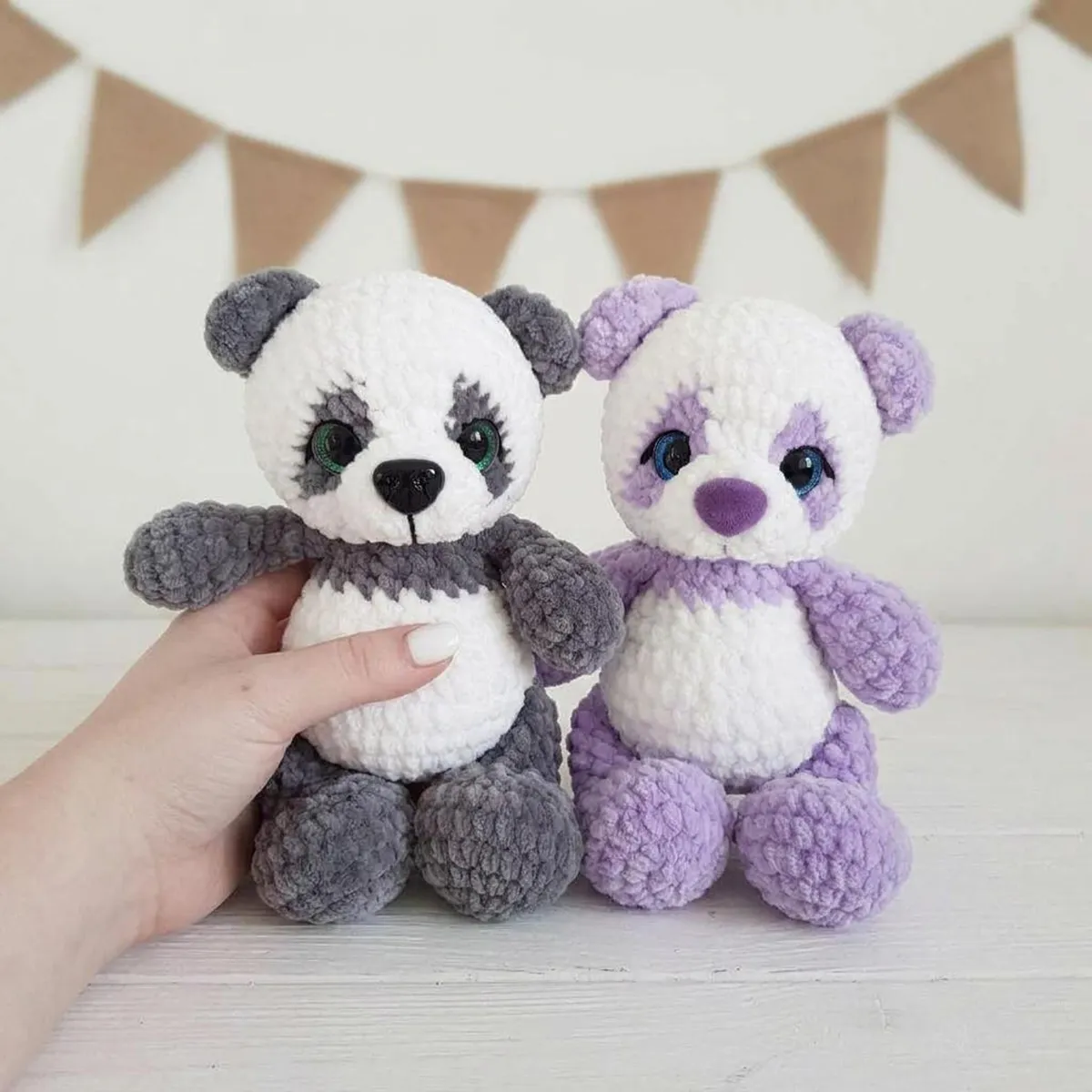
Sitting Chenille Panda · LoopSouk pattern
A beginner-easy chenille panda crochet pattern: about 20 cm sitting, 18-page PDF with stitch counts on every round, 7 technique lessons and three colourways (black, grey, lavender).
≈ $3.00 · instant PDF download
Tip 9: Make colour changes on the last yarn-over
Change to the new colour while finishing the last stitch in the old colour (pull the new colour through the final two loops). In chenille, colour jogs are softened by the pile, so this method gives patches and muzzles a neat edge.
Tip 10: Knot and hide ends securely
Chenille is slippery, so a woven-in end can creep out. Tie a small knot with the tail, then pull the tail through the body to the opposite side and trim it close. The pile hides it.
Tip 11: Stuff a bit less than you would with cotton
Overstuffing stretches chenille and opens gaps. Stuff until firm but still squishy, adding small pieces at a time.
Tip 12: Watch for "worming"
Worming is when a loop of chenille pushes out of the fabric, usually because the yarn has been stretched or the stitches are loose. Tight-ish, even tension and gentle handling prevent most of it; a poked-out loop can be eased back in with the tip of a needle.
Which projects suit chenille best?
Rounded, simple shapes with few small details: sitting animals, bears, blobs and chunky ornaments. Very small or detailed features can get lost in the pile, which is why designers often make them with bobbles or a contrasting smooth yarn.
- Chubby sitting panda: about 20 cm sitting in chenille with a 4.0 to 4.5 mm hook, low-sew, in black, grey or lavender colourways. Read about the panda.
- One-piece reindeer: about 15 to 18 cm in plush chenille, or about 10 cm in DK/worsted, with ears and antlers worked into the rounds. Read about the reindeer.
- Chunky gingerbread bear: not chenille, but a similar experience in super-bulky (#6) yarn with a 6 mm hook, about 22 to 24 cm tall. Read about Barnaby.
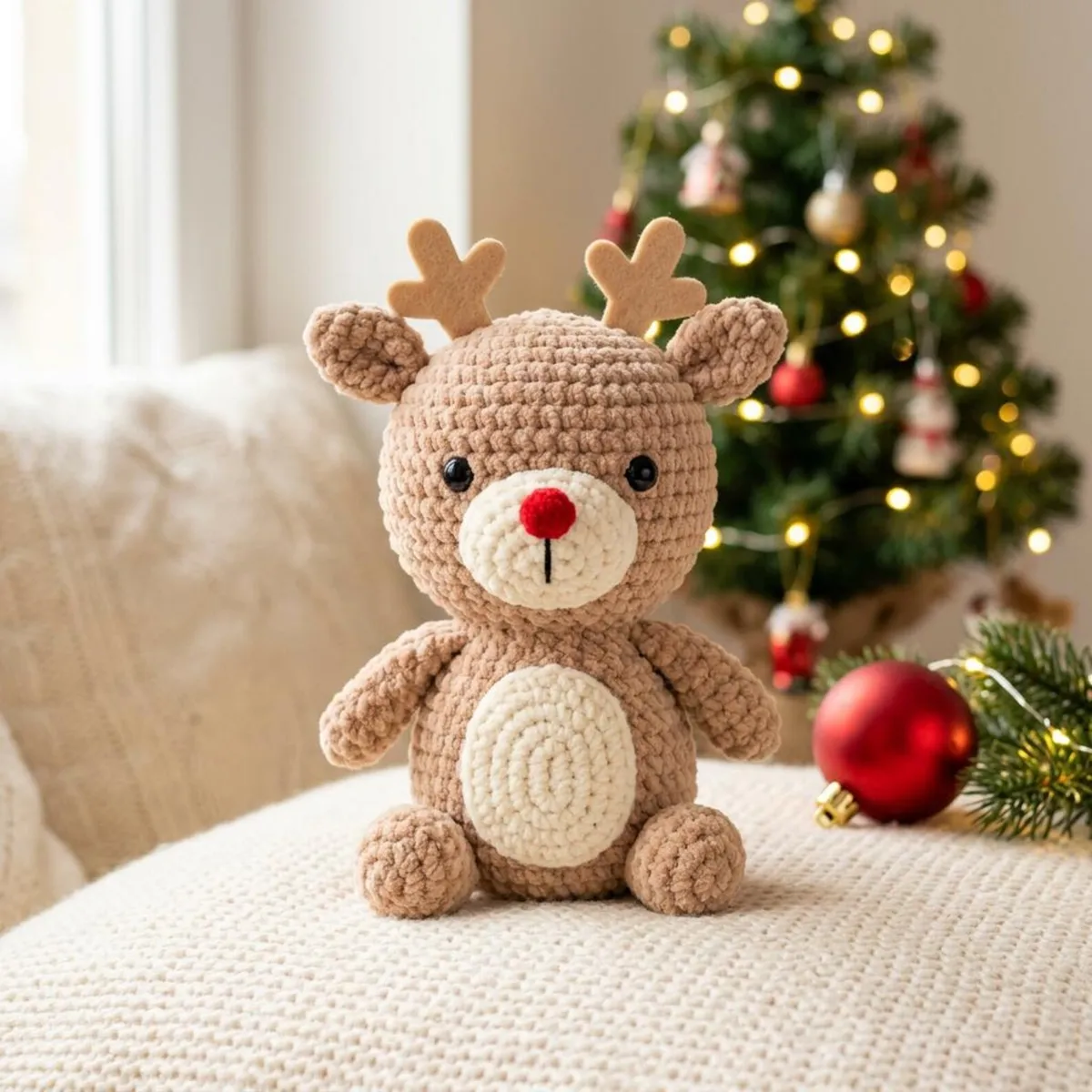
No-Sew Reindeer · LoopSouk pattern
A completely no-sew reindeer crochet pattern: head and body in one piece, ears and antlers worked into the rounds, bobble nose. About 15–18 cm in chenille or 10 cm in DK/worsted.
≈ $3.00 · instant PDF download
Caring for chenille plushies
Hand wash in cool water with a little mild detergent, squeeze gently (don't wring), reshape and air dry. Avoid hot dryers, which can mat the pile.
Choosing chenille yarn for amigurumi
Look for yarn sold specifically for plush toys or "blanket" chenille in a weight your pattern names. Check the ball band for the yarn weight number, and compare the suggested hook with what your pattern asks for; that tells you roughly how much to size down. Darker colours hide stitch definition even more, so for your first chenille toy pick a medium or light shade. Buy all the yarn for one toy from the same dye lot if possible, as shades can vary slightly between batches.
FAQ
What size crochet hook should I use for chenille yarn amigurumi?
Usually smaller than the ball band suggests, so the fabric is dense enough to hide the stuffing. Many plush chenille toys are worked with a hook around 4 to 5 mm; the LoopSouk panda uses 4.0 to 4.5 mm. Always swatch and check.
How do you see stitches in chenille yarn?
You mostly feel them. Use a stitch marker every round, run your finger along the top edge to find each stitch, and count at the end of every round.
Can you do a magic ring with chenille yarn?
Yes, but it can be hard to close. Alternatives are starting with chain 2 or making the magic ring with a thin smooth yarn in the same colour before switching to chenille.
Why does my chenille amigurumi have bald spots?
Bald spots usually come from stretched or frogged yarn, or from loose stitches that let the core show. Avoid re-using unravelled chenille on visible parts and keep tension even.
Is chenille yarn good for beginners?
It is beginner-friendly for simple, rounded shapes if you use a stitch marker every round. For your very first amigurumi, a smooth DK yarn is easier to learn on.
Looking for your next project? See every LoopSouk PDF pattern in one place, each with its own article and Etsy link.
Browse all LoopSouk patterns

