Crochet Keychain Ideas to Sell at Craft Fairs (Plus a Market Prep Checklist)
Keychains and minis are the impulse buys of the craft fair table. Here is how to choose designs that sell, price them sensibly, make them sturdy and display them well.
Save this guide to Pinterest
If you have ever stood behind a craft fair table, you know the pattern: people stop for the big pieces, but they buy the small ones. Keychains, bag charms and mini amigurumi are cheap enough for an impulse purchase and cute enough to pick up. This guide covers crochet keychain ideas to sell, how to make them hold up to handling, and a market prep checklist.
Why keychains sell so well at markets
- Low price, quick decision. Shoppers who would hesitate at a large plush often say yes to a small charm without thinking twice.
- Gifts and add-ons. People buy them for friends, teachers and kids, and add one to a bigger purchase.
- Collectable. A row of the same animal in different colours makes people want "their" colour, or two.
- Fast to make. You can build stock in the evenings without months of work.
Crochet keychain ideas that tend to sell
Popular themes change, so watch what people around you are carrying and what is trending online. These categories come up again and again:
Trendy animals
Axolotls, frogs, ducks, octopuses, bees, cats and capybaras are long-running favourites, especially with teens. The LoopSouk axolotl keychain pattern and frog keychain pattern are both 8 to 9 cm, one piece, with a keychain loop chained off the final round and four colourways each, so you can display a rainbow row.
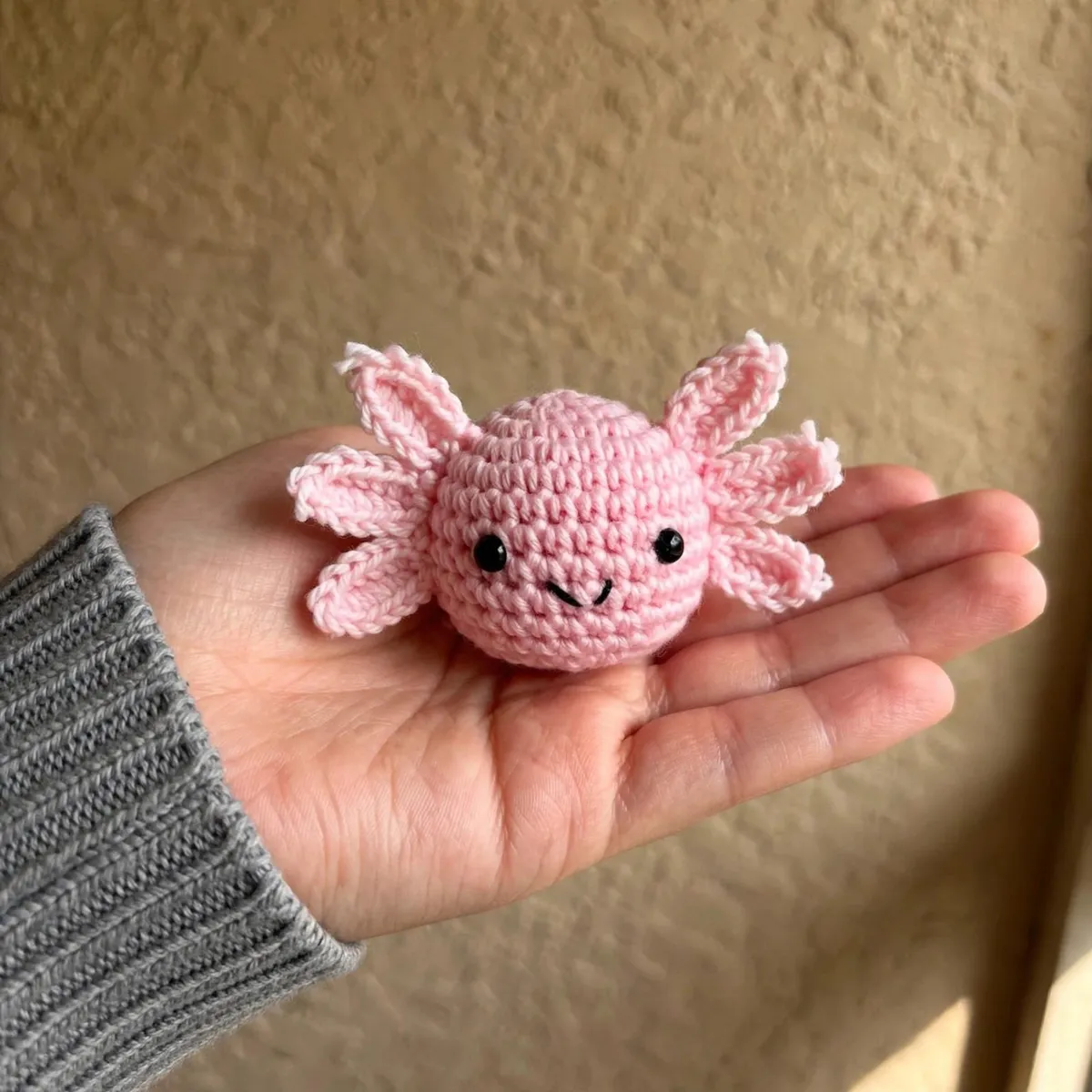
No-Sew Chubby Axolotl · LoopSouk pattern
A kawaii no-sew axolotl worked head-to-tail in one chubby piece, with six frilly gills crocheted in. 8–9 cm, DK yarn, 3.5 mm hook, 4 colourways, plush or keychain.
≈ $3.00 · instant PDF download
Food and fruit
Strawberries, avocados, mushrooms, mini cakes and boba cups are colourful, simple to shape and appeal to all ages.
Seasonal minis
From November, Christmas characters become the stars. Small snowmen, gingerbread, reindeer and penguins double as tree ornaments. The Christmas minis bundle gives you seven 8 to 11 cm characters in the same DK yarn and hook, which makes batch-making and a consistent table look much easier.
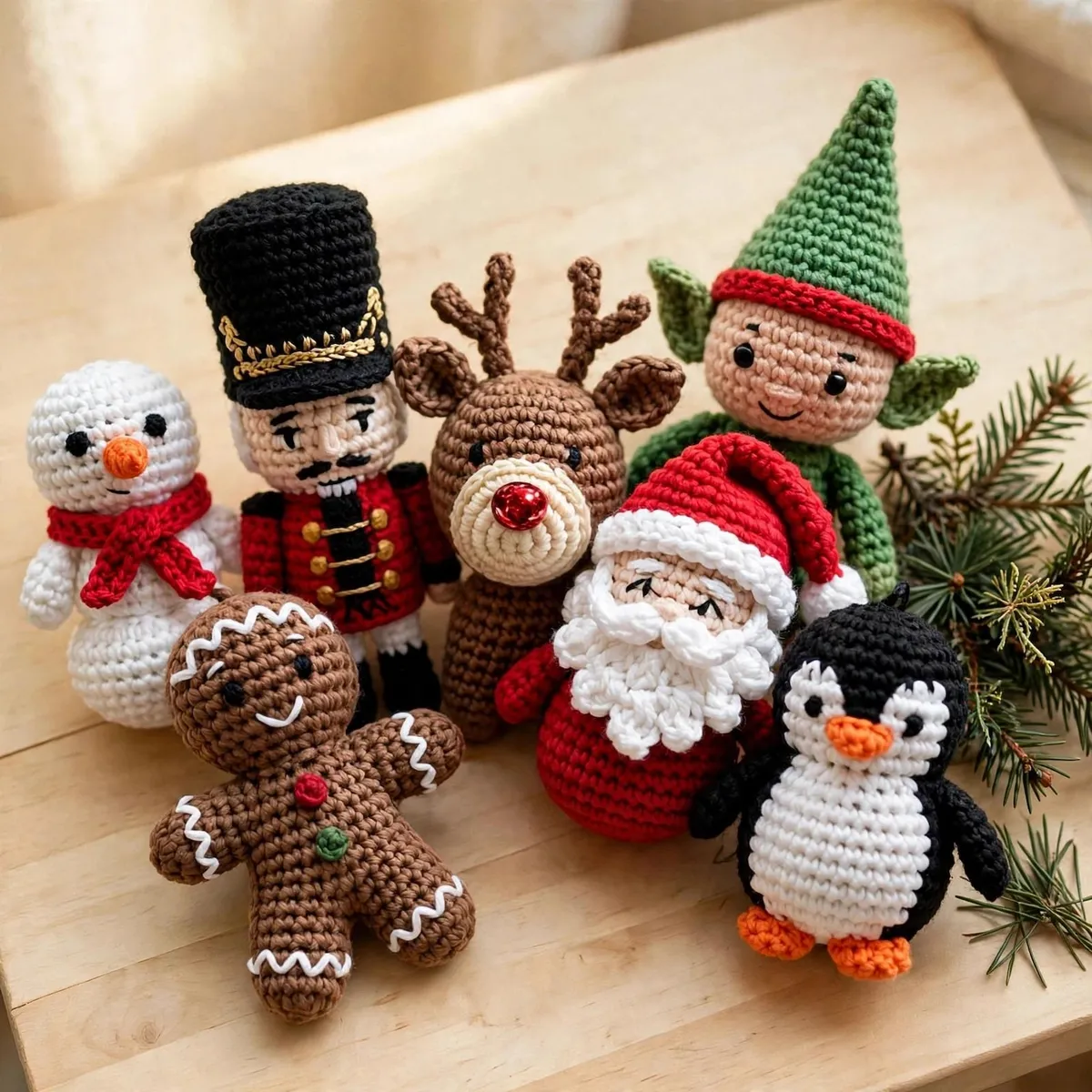
Christmas Minis Bundle (7 in 1) · LoopSouk pattern
Seven beginner-friendly Christmas minis in one 29-page PDF: snowman, nutcracker, gingerbread man, reindeer, Santa, elf and penguin. All DK yarn and one 3.5 mm hook.
≈ $3.00 · instant PDF download
Personalised charms
Initials, a colour-matched bag charm or a school-colours set. Offer "pick your colour" from a small range so it stays manageable.
Hearts, stars and flowers
Flat shapes are very fast and work well as a lower-priced option at the front of the table.
How to make keychains that survive real life
A keychain is pulled, squashed and swung all day, so durability matters more than on a shelf toy.
- Prefer one-piece, no sew amigurumi designs. Legs and gills that are worked into the fabric cannot work loose the way sewn parts can.
- Crochet tightly. Dense fabric hides the stuffing and keeps its shape. Size your hook down if you can see fibrefill through the stitches.
- Anchor the hardware well. Attach the keyring through a sturdy chain loop or several stitches, not one strand.
- Lock safety eyes before closing and check the washers are fully pushed down.
- Stuff firmly so the charm doesn't flatten in a pocket.
- Add a safety label. Small parts mean "not for children under 3" on the tag.
Pricing basics
There is no single right price. It depends on your area, your materials and your time. A simple starting formula many makers use:
materials + (time in hours × an hourly rate you are happy with) + a little for packaging and fees.
Then compare with what similar items sell for at your local markets and adjust. Small keychains at craft fairs commonly sell somewhere in the low-to-mid teens in US dollars, with flat charms lower and larger or more detailed pieces higher. Bundle deals ("3 for...") work well for small items and move stock quickly.
Display tips
- Go vertical. A pegboard, a small rack or a branch in a pot lets keychains hang at eye level.
- Group by colour or animal so the table looks abundant rather than random.
- Use baskets for minis people can rummage through.
- Price clearly. One sign per group is easier to read than tiny tags.
- Show the season. A small tree hung with your ornaments sells ornaments better than a bag of them.
Market prep checklist
- Stock: decide a target (for example 30 to 50 keychains for a one-day local fair) and track it.
- Hardware: keyrings, lobster clasps, jump rings and a pair of pliers.
- Tags: price, care note ("hand wash cold"), safety note and your shop name or social handle.
- Display: rack or pegboard, baskets, tablecloth, signs.
- Payments: card reader charged, some change, and a QR code for your shop.
- Packaging: small paper bags.
- Repair kit: needle, scissors, spare eyes and stuffing.
- Credit line: if you use someone else's pattern, include the designer credit they ask for.
Can you sell items made from a pattern?
It depends entirely on the designer's terms, so always read them. A common rule is that you may sell finished items you crochet by hand, but never the pattern file itself. All LoopSouk patterns allow you to sell hand-made finished items with credit to LoopSouk as the designer; sharing, copying or reselling the PDF is not allowed. A small "Pattern by LoopSouk" line on your tag is enough.
Never sell items made from another designer's pattern if their terms forbid it, and do not copy someone's design and call it your own.
Batch-making stock efficiently
The difference between a stressful market prep and a calm one is usually workflow. Choose three to five core designs and make them in several colours rather than twenty different patterns. Work in stages: all the bodies first, then all the eyes, then stuffing and closing, then the hardware. Keep a simple tally sheet of what you have made so you can see at a glance which colour or animal is running low. Prepare small kits (yarn, eyes, a marker) in zip bags so you can crochet on the bus or during a lunch break. And make a few extra of your best seller; it is far better to take some home than to sell out in the first hour.
After the market: learn from what sold
Write down what sold, what got picked up but not bought, and what people asked for that you didn't have. A "do you have it in purple?" question three times in one day is market research you cannot get anywhere else. Note the time of day sales happened and which display spot worked best. Before your next event, adjust your stock to match: more of the winners, fewer of the slow movers, and one or two new designs to test. Over a season this simple habit turns guesswork into a reliable best-seller list.
FAQ
What crochet keychains sell best?
Small trendy animals (axolotls, frogs, ducks, bees), food and fruit, seasonal minis and personalised initials or colour-matched charms tend to sell well. Watch your own market to see what moves.
How much should I charge for a crochet keychain?
Start with materials plus your time at an hourly rate plus packaging, then compare with similar items at local markets. Many small crochet keychains sell in the low-to-mid teens in US dollars.
How many items should I bring to my first craft fair?
For a one-day local fair, many makers bring 30 to 50 small items plus a few larger pieces. Track what sells and adjust for the next event.
Can I sell keychains made from LoopSouk patterns?
Yes. You may sell finished items you crochet by hand with credit to LoopSouk as the designer. The PDF pattern itself must not be shared, copied or resold.
Looking for your next project? See every LoopSouk PDF pattern in one place, each with its own article and Etsy link.
Browse all LoopSouk patterns

